Where to Dump Asphalt in Los Angeles and Nearby San Fernando Valley Cities

Old asphalt is heavy, messy, and expensive to move twice. If a driveway, parking lot, trench patch, or demo job leaves you with broken chunks, the best place to take it is usually an asphalt recycler, not a regular dump.
In Los Angeles and the San Fernando Valley, clean asphalt can often be recycled into new road base or paving material. That can lower disposal costs and keep usable material out of landfills. The trick is knowing what kind of asphalt you have, what facilities commonly accept, and what to check before loading the truck.
Visit Los Angeles Disposal
Your trusted dump yard and concrete recycling facility in Sun Valley, CA, accepting concrete, asphalt, brick, dirt, and construction debris.
📍 9760 Glenoaks Blvd, Sun Valley, CA 91352📞 (818) 625-9256
Serving Los Angeles, Burbank, Glendale, North Hollywood, Van Nuys, and surrounding areas.

Start with asphalt recycling yards
For most small and mid-size jobs, the first call should be to an asphalt recycling yard or an aggregate recycling facility. These sites take broken asphalt pavement and grind it into recycled asphalt product, often called RAP.
Clean asphalt is usually the easiest material to place. That means:
No trash, wood, plastic, drywall, or green waste
No wet concrete slurry
No large amounts of dirt or clay
No rebar, steel mesh, or mixed demolition debris
No hazardous material
If the load is mostly asphalt with a little road base attached, many recyclers may still accept it. If the load is mixed with concrete, brick, tile, soil, and general debris, it may need to go to a construction and demolition facility instead.
When searching online, use terms like:
`asphalt recycling near me`
`aggregate recycling Los Angeles`
`C&D recycling San Fernando Valley`
`clean asphalt disposal`
`recycled asphalt drop off`
Good areas to search around Los Angeles and the Valley include Sun Valley, Pacoima, Sylmar, Van Nuys, North Hollywood, Burbank, Glendale, San Fernando, Chatsworth, and Sunland-Tujunga. These areas have industrial zones, transfer stations, recycling yards, and construction material facilities. Always call before you drive, since accepted materials and hours can change.
Know the difference between recycling, C&D disposal, and landfill dumping
Not every “dump” handles asphalt the same way. Picking the wrong type of facility can waste time and money.
Option | Best for | What to confirm |
Asphalt recycler | Clean asphalt chunks or grindings | Minimum load, fees, hours, and whether hand unloading is allowed |
Aggregate recycler | Asphalt, concrete, and other inert material | Whether mixed loads are accepted |
C&D facility | Mixed construction debris | Sorting rules and price per ton or per load |
Inert landfill | Asphalt that cannot be recycled | Acceptance rules and paperwork |
Junk removal or hauling service | Small jobs without a truck | Whether they take asphalt to a recycler |
A regular municipal trash drop-off is usually not the right place for asphalt. Asphalt is construction debris, and many public disposal programs focus on household waste, bulky items, green waste, or hazardous waste.
For Where to Dump Asphalt in Los Angeles and Nearby San Fernando Valley Cities, the safest answer is this: take clean asphalt to a local recycler when possible, and take mixed or contaminated loads to a permitted C&D or inert debris facility.

Call ahead with the right questions
Before you load up, make a quick phone call. A five-minute call can save a full afternoon of driving around with a rejected load.
Ask these questions:
Do you accept asphalt today?
Facilities can pause acceptance when stockpiles are full or equipment is down.
Does the asphalt need to be clean?
Most recyclers prefer clean material. Ask how much soil, concrete, or road base is allowed.
Do you accept hand unloading?
Some yards are built for dump trucks and loaders. Others may allow pickup trucks and trailers.
Is there a minimum charge?
Small loads may still have a minimum fee.
Do you charge by the ton, cubic yard, or flat load?
Pricing varies by facility type. Ask before going.
Do you need a hard hat, vest, or closed-toe shoes?
Industrial yards often have safety rules for everyone on site.
What are your hours and last load time?
Many material yards close earlier than retail businesses, and some stop accepting loads before the posted closing time.
If you are using a rented trailer or pickup, also check the weight limit. Asphalt is dense. A load that looks small can still be too heavy for a light-duty trailer.
Keep the load clean and legal
A clean load has a better chance of being recycled. It can also make unloading faster.
Before loading, sweep or separate loose trash from the asphalt pile. If the asphalt came from a driveway demolition, keep it apart from dirt, roots, wood forms, sprinkler pipe, and edging. If it came from a trench or street cut, separate asphalt from wet soil and base material as much as the job allows.
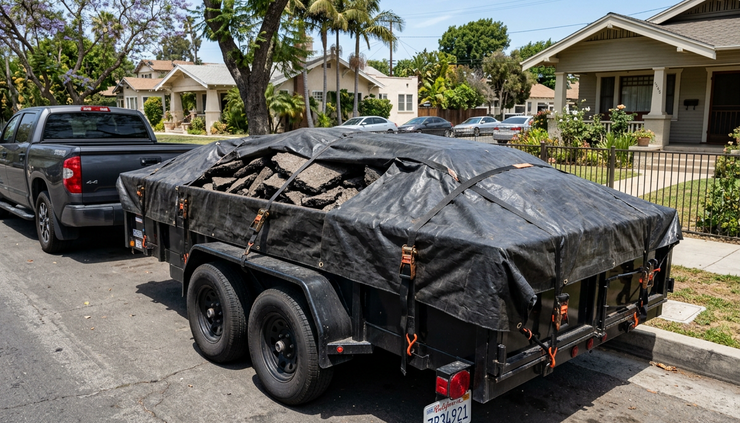
On the road, secure the load. California requires drivers to prevent material from spilling, blowing, or dropping onto streets and freeways. Use a tarp, straps, or both. This matters even for short trips through Van Nuys, Burbank, Glendale, or Pacoima.
For larger jobs, weigh the cost of doing it yourself against hiring a hauler. A contractor, dumpster company, or junk removal crew may already know which facilities accept asphalt in your part of the Valley. Ask where they take the material and whether they recycle it.
Local areas to check first
Los Angeles County has many different disposal and recycling options, but availability depends on where you are starting. If you are in the San Fernando Valley, it often makes sense to check nearby industrial corridors before driving across the basin.
Places to search near include:
Sun Valley and Pacoima for recycling yards, aggregate facilities, and construction material sites
Sylmar and San Fernando for north Valley disposal and transfer options
Van Nuys and North Hollywood for central Valley hauling routes
Burbank and Glendale for nearby transfer and C&D options
Chatsworth and Canoga Park for west Valley hauling access
Downtown Los Angeles and East LA industrial areas if the job is closer to central LA
Do not assume a nearby landfill or transfer station will take asphalt just because it accepts debris. Asphalt may be treated differently from general trash, green waste, or household junk.
If your project is tied to a permitted job, keep disposal receipts. Some projects need proof that construction debris went to an approved facility or was diverted from landfill. Contractors may also need tonnage records for job closeout.
When asphalt should not go to a recycler
Most old driveway and pavement asphalt can be recycled, but some loads need extra care.
Avoid taking asphalt directly to a recycler if it is mixed with:
Excessive soil or mud
Trash or household debris
Roofing material
Oil-soaked material
Chemicals, paint, or solvents
Unknown industrial contamination
If the material may be contaminated, contact the local solid waste authority or a permitted construction debris facility for guidance. Do not hide contamination in a load. It can create safety problems and may lead to rejection or extra fees.

The best next step
If the asphalt is clean, start with an asphalt or aggregate recycler near your part of Los Angeles or the San Fernando Valley. Call first, describe the load honestly, confirm the fee, and ask about unloading rules.
If the load is mixed, dirty, or from a larger demolition job, look for a permitted C&D facility or hire a hauler that can sort and dispose of it properly.
The key is simple: separate the asphalt, verify the drop-off rules, and keep the load covered. That gives you the best chance of saving money, avoiding rejected loads, and sending usable material back into the construction cycle.


Comments