Where to Dump Concrete in Los Angeles and Nearby San Fernando Valley Cities

A broken patio, old driveway, or pile of demo rubble can turn into a problem fast. Concrete is heavy, most curbside programs will not take it, and dumping it in an alley or vacant lot can lead to fines. The good news is that Los Angeles and the San Fernando Valley have several practical disposal routes if the material is sorted and you plan ahead.
This guide covers the main places to take concrete, what to ask before you go, and how to handle loads in Los Angeles, Burbank, Glendale, San Fernando, Calabasas, and nearby Valley communities.
Visit Los Angeles Disposal
Your trusted dump yard and concrete recycling facility in Sun Valley, CA, accepting concrete, asphalt, brick, dirt, and construction debris.
📍 9760 Glenoaks Blvd, Sun Valley, CA 91352📞 (818) 625-9256
Serving Los Angeles, Burbank, Glendale, North Hollywood, Van Nuys, and surrounding areas.
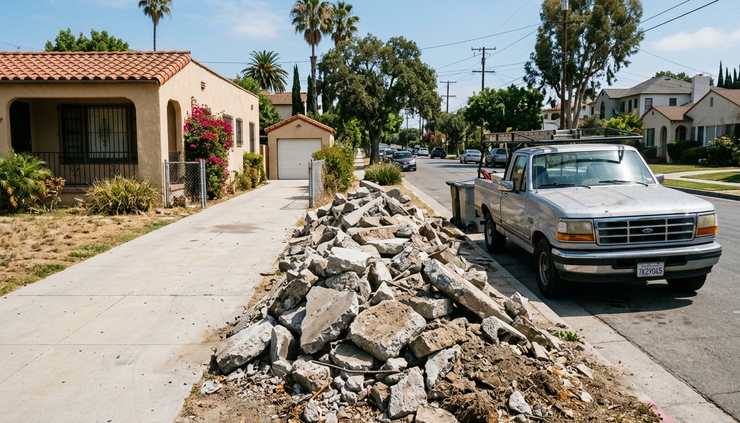
Concrete usually goes to a recycler, not the regular dump
The best place to start is a construction and demolition recycling facility. These sites crush clean concrete into base material for roads, driveways, drainage work, and new construction projects.
Most concrete recyclers prefer loads that are clean and separated. That means:
Concrete chunks without household trash
Little to no wood, plastic, soil, drywall, or green waste
Rebar is often acceptable, but rules vary by site
Painted, coated, or contaminated concrete may need special handling
If you search for where to dump concrete in Los Angeles and nearby San Fernando Valley cities, use terms like `concrete recycling`, `C&D recycling`, `inert debris disposal`, or `clean concrete disposal` along with your city or neighborhood.
Good search areas include Sun Valley, Pacoima, Sylmar, North Hollywood, Van Nuys, Burbank, Glendale, San Fernando, and the northwest Valley. These areas tend to have more industrial yards and material recovery sites than dense residential zones.
Call before you load the truck
Concrete disposal rules can change by facility, load size, vehicle type, and contamination level. A quick phone call can save a wasted trip, especially if the load came from an older property or includes mixed debris.
Ask these questions before heading out:
Do you accept clean concrete from homeowners or only contractors?
Do you accept concrete with rebar or wire mesh?
Is there a minimum fee or minimum load size?
Do you charge by weight, volume, or vehicle type?
Do you require a hard hat, safety vest, or closed-toe shoes?
Do you accept mixed loads with asphalt, brick, tile, or block?
What are your hours, and when do you stop accepting loads?
Be honest about what is in the load. A clean pile of broken sidewalk is one thing. A pile mixed with dirt, lumber, insulation, and bags of trash is another. Mixed debris usually costs more and may need to go through a transfer station instead of a concrete recycler.
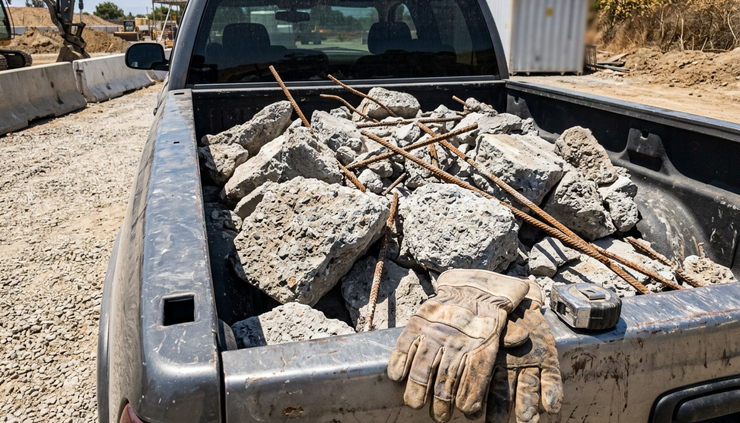
Best disposal routes by area
Los Angeles is huge, and “nearby” can mean a long drive when hauling thousands of pounds. Pick the closest practical option, but weigh distance against disposal rules and fees.
Area | Practical places to check |
Central and East Los Angeles | C&D recycling facilities, inert material yards, transfer stations that accept construction debris |
San Fernando Valley | Concrete recycling yards, gravel and aggregate yards, demolition debris recyclers |
Burbank and Glendale | Local transfer stations, private C&D recyclers, nearby industrial-area recycling yards |
City of San Fernando and Sylmar | Inert debris sites, concrete recyclers, contractor disposal yards |
Calabasas, Hidden Hills, and west Valley | C&D facilities in the west Valley, Agoura area, or northwest Los Angeles County |
Santa Clarita and Simi Valley areas | Local construction debris recyclers or county-approved disposal facilities |
For small loads, the closest facility may be worth a slightly higher minimum fee. For large driveway or slab removals, it may pay to compare two or three sites because weight-based pricing can add up.
Small loads have different options than large jobs
A few broken concrete blocks can fit in a pickup. A driveway may require several tons of hauling. Match the disposal plan to the size of the job.
For a few buckets or small chunks
If the load is small, call a local C&D recycler or transfer station and ask if they accept homeowner drop-offs. Some facilities have minimum charges, so a small load may cost the same as a much larger one.
Do not place concrete in regular trash carts. It can damage collection equipment, and the cart may be left behind.
For a pickup truck load
A pickup load is often the sweet spot for DIY disposal. Secure the load, keep it below the bed rails, and use a tarp. Concrete shifts while driving, and loose chunks can become road hazards.
Check your vehicle’s payload rating before loading. Concrete weighs far more than it looks. It is easy to overload a half-ton pickup with a small-looking pile.
For a full demolition project
For patios, driveways, retaining walls, or pool deck removal, a dumpster or hauling service is usually safer. Ask for a lowboy dumpster or a container rated for concrete. Standard roll-off bins may have strict fill lines for heavy debris.
Some haulers offer concrete-only bins at a better rate because the material can be recycled.

Keep the load clean to save money
Concrete is easier to recycle when it is separated from trash and soil. Clean loads may qualify for lower recycling rates, while dirty loads can be charged as mixed construction debris.
Before hauling, sort out:
Wood stakes and forms
Plastic sheeting
Landscape fabric
Dirt and sod
Trash and packaging
Hazardous materials
Painted or sealed concrete is not always a problem, but some facilities may reject it depending on the coating. Concrete from industrial sites, auto shops, or areas with chemical spills needs extra caution.
If you are removing concrete from an older structure, watch for layers such as tile, mastic, or waterproof coatings. When in doubt, ask the disposal facility what they will accept.
What not to do with old concrete
Avoid shortcuts that create bigger problems later.
Do not dump concrete in:
Alleys or vacant lots
Washes, canyons, or creek beds
Public trash bins
Apartment dumpsters
Street gutters
Regular curbside trash carts
Illegal dumping can trigger cleanup costs and fines. It also blocks drainage systems and creates hazards for pedestrians, cyclists, and vehicles.
Reusing concrete on-site can be a good option for some projects. Broken concrete, often called urbanite, can work for garden edging, informal paths, retaining features, or drainage zones. Keep it stable, avoid sharp edges in walking areas, and check local rules if the work affects drainage or slopes.

The simplest plan for a clean disposal trip
Start by sorting the concrete from other debris. Estimate the load size, then call nearby concrete recyclers or C&D facilities before you drive. Confirm what they accept, how they charge, and whether your vehicle type is allowed.
For small jobs, a local drop-off may be enough. For heavy slabs or driveway removal, use a concrete-rated dumpster or a hauler who can take the material directly to a recycler.
The best disposal choice is usually the one that keeps the load clean, the drive short, and the rules clear before the first chunk goes in the truck.


Comments